
-
 Accreditation in accordance with standards ISO/IEC 17025:2017, ISO/IEC 17065:2012
 -
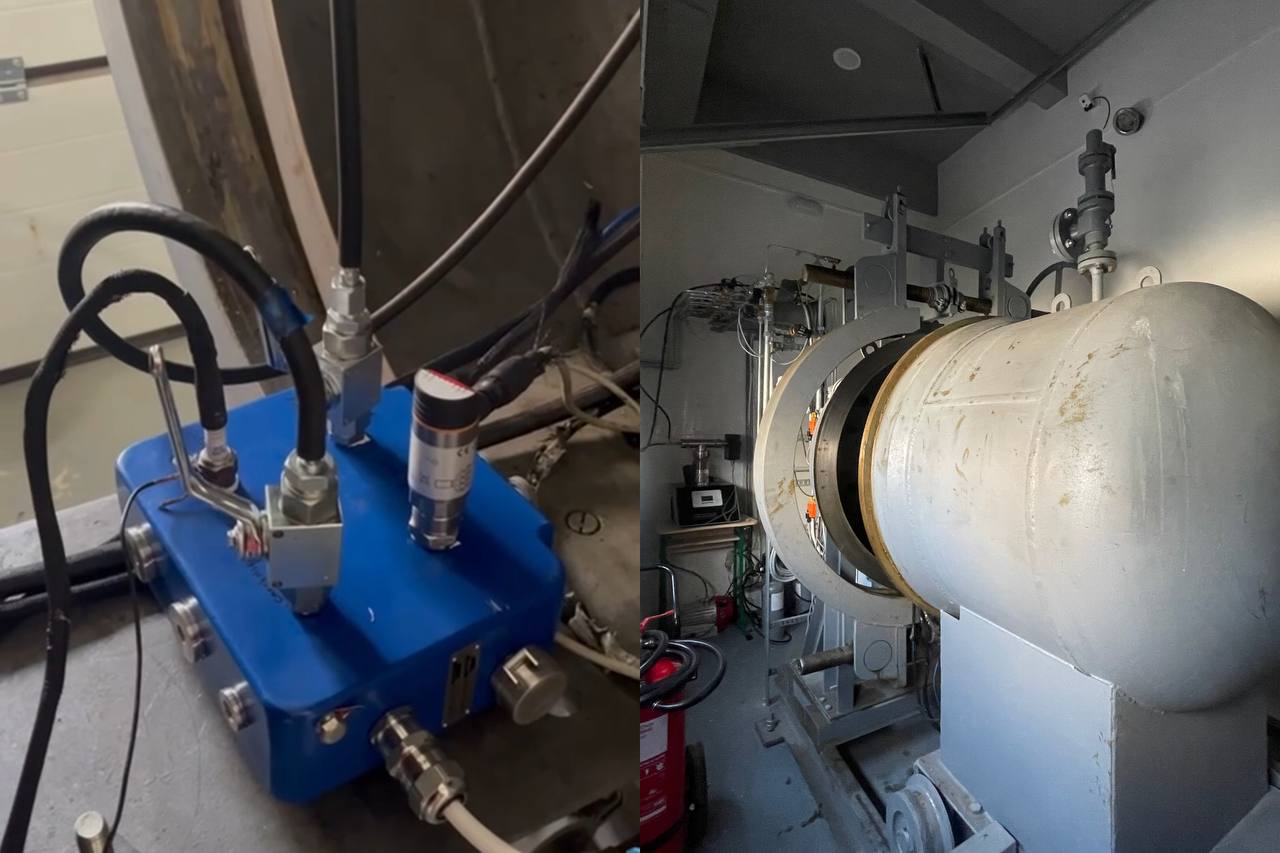
Specially equipped laboratory for conducting complex tests on all types of explosion protection
-
Unique challenges for Ukraine and the world
-
20+ years of cutting-edge experience of our experts in the industry
-
Objective test results at affordable prices
-
Significant savings in costs and time when testing at the research sample stage rather than at the mass production stage
Competent authorities

ATEX testing
Explosion-proof equipment
Service provider
ТОВ “ЦВВО” – одна з небагатьох організацій у світі, які можуть проводити оцінку відповідності вибухозахищеного обладнання. Ми призначені та уповноважені Міністерством економіки проводити роботи з оцінки відповідності обладнання та захисних систем, призначених для використання в потенційно вибухонебезпечних середовищах, на території України та ЄС відповідно до стандартів ISO/IEC 17025:2017, ISO/IEC 17065:2012
All unique tests
Standards
Testing in accordance with the requirements of the Technical Regulation for Equipment and Protective Systems Intended for Use in Potentially Explosive Atmospheres (ПКМУ № 1055 від 28.12.2016) and Directive 2014/34/EU (ATEX). Testing according to EN IEC 60079 to confirm that the equipment will not become a source of ignition in an explosive atmosphere, which is critical for petrochemicals, metallurgy, energy, mining, etc. Testing of explosion-proof equipment for resistance to prolonged exposure to ultraviolet light and water in accordance with UL 746C.
Leave a request for a consultation
Describe your request and our specialist will contact you shortly to provide detailed advice on certification, conformity assessment or product labeling in accordance with Ukrainian and EU requirements.
Testing of explosion-proof equipment
Explosion-proof equipment is used in all industries, manufacturing, and technological processes where explosive atmospheres are present or may be present. Depending on the type of explosive atmosphere present in a given location, different types of explosion protection are used in equipment, and accordingly, different requirements apply to them, and different approaches are used to assess the conformity of such equipment.
In Ukraine, as in the rest of the world, there are mandatory requirements for equipment used in potentially explosive atmospheres. These are the Technical Regulations for Equipment and Protective Systems Intended for Use in Potentially Explosive Atmospheres No. 1055. This resolution of the Cabinet of Ministers of Ukraine contains requirements for the modules used during conformity assessment, depending on the explosive environment in which the equipment will be used and, accordingly, the type of explosion protection it has.
The cost and complexity of testing and conformity assessment of explosion-proof equipment depend on several key factors:
1. Environment of operation.
Equipment requirements are determined by the composition of the explosive atmosphere (gas or dust mixture, auto-ignition temperature, etc.) and the area of application — from mining equipment to machinery for gas or dust environments.
2. Zone classification.
The higher the risk level (an area where an explosive atmosphere is present continuously or periodically), the stricter the requirements and the more extensive the conformity assessment procedure.
3. Equipment type.
Simple equipment (such as lamps or junction boxes) requires less expertise. At the same time, complete installations — combines, pump units, lifting machines, fuel dispensers — require comprehensive technical expertise, which makes the process longer, more complex, and more expensive.
Based on the results of certification tests and trials, a test report is drawn up, which is one of the grounds for the conformity assessment body to decide whether to issue a certificate of conformity.
Our advantages

NAAU accreditation according to DSTU EN ISO/IEC 17025:2019 and a full range of tests for all types of explosion protection
Specially equipped and furnished premises for conducting tests with automated results delivery processes
Best practices and high competence of specialists in each area of explosion protection testing
Guaranteed real test results, maximum accuracy and reliability
Our bodies are among the few international centers authorized to conduct conformity assessments of explosion-proof equipment.
Continuous research and development and constant improvement of testing processes
Technical regulations for testing explosion-proof equipment
- Technical regulations for equipment and protective systems intended for use in potentially explosive atmospheres (Resolution of the Cabinet of Ministers of Ukraine No. 1055 dated December 28, 2016)
- Directive 2014/34/EU (ATEX)
Equipment and protective systems intended for use in potentially explosive atmospheres
Types of tests for explosion-proof equipment
- Drop test
- Heat shock test
- Small parts ignition test
- UV and water resistance
- Impact test
- Torque test for bushing insulators.
- Mechanical resistance of transitions, cable connections, plugs
- Heat resistance test
- Cold resistance test
- Testing the resistance of Group I electrical equipment to the effects of chemicals
- Checking the integrity and continuity of grounding
- Determining the surface resistance of non-metallic parts of enclosures
- Capacitance measurement
- Verification of fan ratings
- Charge transfer test
- Electrostatics. Hazardous manifestations
- Alternative tests for elastomeric sealing rings
- Typical impact resistance test
- Marking and instructions
Types of explosion protection
- Type of explosion protection: increased safety “e”
- Type of explosion protection “n”
- Type of explosion protection: “sealing ‘m’
- Type of explosion protection: explosion-proof enclosure “d”
- Type of explosion protection: “enclosure under increased pressure ”p”
- Type of explosion protection: quartz filling of the enclosure “q”
- Type of explosion protection: liquid filling of the enclosure “o” and structural protection
- Type of explosion protection: intrinsically safe electrical circuit “i”
- Type of explosion protection: “structural safety protection” ‘c’
- Type of explosion protection: “ignition source control protection” ‘b’
- Type of explosion protection: “immersion in liquid” ‘k’
- Type of explosion protection: “protection of equipment” and transmission systems using optical radiation
- Type of explosion protection: electrical equipment with explosion protection level (EPL) Ga
- Type of explosion protection: explosion-proof electrical resistive distribution heating
Cost of testing
The cost and complexity of such tests and conformity assessments depend on the zone and composition of the explosive atmosphere, as well as the type of equipment and type of explosion protection.
The more complex the type of explosion protection, or the combination of several types of explosion protection, the more extensive the requirements and the verification of these requirements for products, the scope of testing and technical expertise. This determines the cost of testing and conformity assessment of equipment and protective systems intended for use in potentially explosive atmospheres.
For an initial analysis of the scope of work and determination of the conformity assessment procedure, it is MANDATORY to know the explosion protection marking of the equipment, as well as to have a general description of the products, nominal characteristics, photographs, drawings, and electrical diagrams. Our specialists will review your request and technical documentation and quickly and efficiently answer your questions, as well as help you choose the conformity assessment procedure for your equipment free of charge..
You can contact our providers directly:
.
1. Testing laboratory ТОВ “ЦЕНТР ВІДПОВІДНОСТІ ВИБУХОЗАХИЩЕНОГО ОБЛАДНАННЯ”
Based on the test results, we provide a TEST PROTOCOL
It contains the following information:
- Title and details of the testing laboratory (including accreditation);
- Protocol number and date of compilation;
- Details of the customer ordering the tests;
- Product name;
- Product type, model, serial number;
- Manufacturer and/or supplier;
- Date of receipt of the sample by the laboratory;
- Name of the Technical Regulation or standard according to which the test is carried out;
- List of methods and standards used;
- Test conditions (temperature, humidity, voltage, etc.);
- Measuring instruments (with calibration details);
- Detailed data for each test item (e.g., electrical strength test, protection against electric shock, resistance to overvoltage, etc.);
- Measured actual values and their comparison with acceptable standards;
Comments or observations (if any); - Overall test result (complies/does not comply with requirements);
- Remarks or recommendations (if any);
Signature(s) of the responsible person(s) and stamp (if applicable).


Industry


We have prepared answers to frequently asked questions from customers.
1. Electrical equipment: distribution cabinets, lighting fixtures, motors, sensors, switches, automation devices.
2. Mechanical equipment: gearboxes, pumps, fans, mixers, compressors, even if they do not have electronic components.
3. Protective systems: devices or components designed to stop an explosion or limit its impact (e.g., explosion relief valves).
4. Components that do not operate independently but are designed to be integrated into explosion-proof equipment.
5. Control and diagnostic systems that ensure safe operation in areas with explosion risk.
Equipment is classified into groups (I, II, III) and categories (M1/M2, 1/2/3) depending on the level of explosion protection and the area of application. If your equipment is intended for use in oil refineries, chemical, pharmaceutical, agricultural enterprises, elevators, or mines, it is most likely subject to the requirements of this regulation.
– Conclusion on compliance with the standard;
– (if necessary) recommendations for further refinement of the design or materials.
-
Unique challenges for Ukraine
-
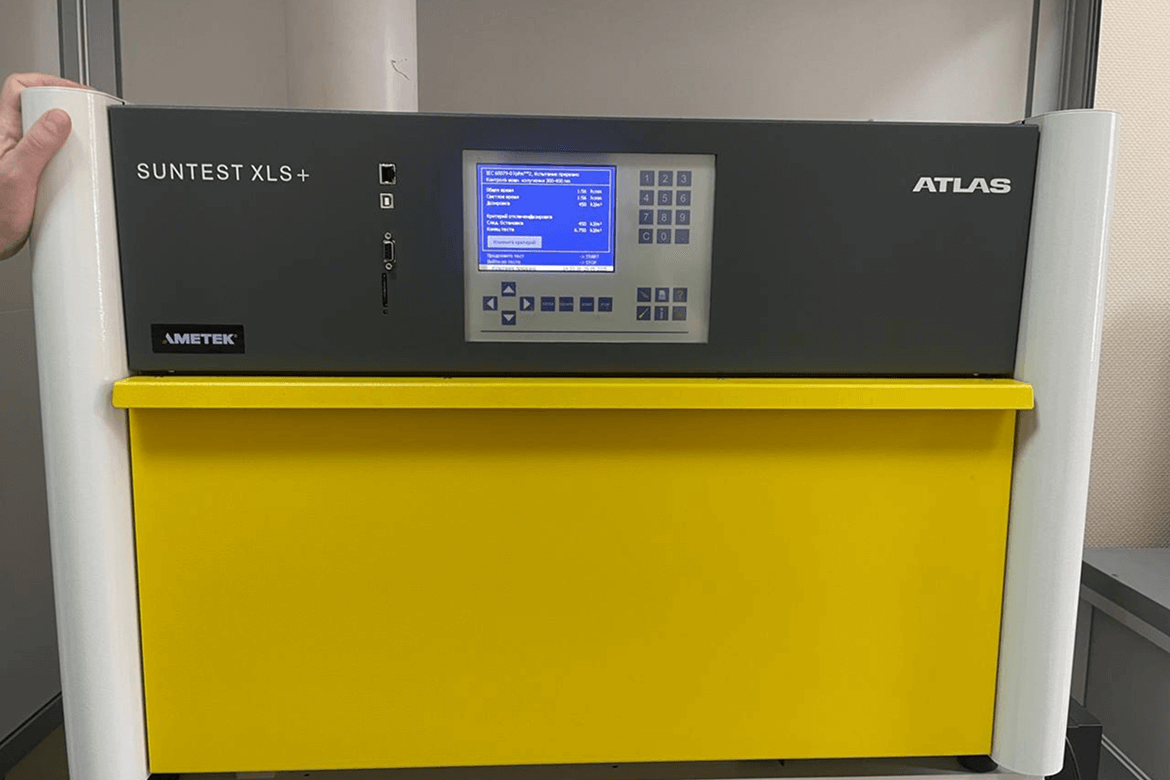
Using a desktop xenon device for rapid testing of material resistance to ultraviolet light and water Suntest XLS+ manufactured in the USA
-
Ability to test textiles, plastics, polymers, rubber, explosion-proof equipment, paint and varnish coatings
-
The testing is done according to international standards in an accredited lab.
-
Competitive prices without intermediaries
Competent authorities
Leave a request for a consultation
Describe your request and our specialist will contact you shortly to provide detailed advice on certification, conformity assessment or product labeling in accordance with Ukrainian and EU requirements.
Testing materials for resistance to ultraviolet light and water according to international standards
We conduct laboratory tests unique for Ukraine on the resistance of materials to atmospheric influences, in particular to ultraviolet (UV) radiation, precipitation, moisture, and condensation, in accordance with international standards (ISO, EN, ASTM), namely EN IEC 60079-0, UL 746C, ISO 4892-2, and others. Testing allows us to determine how a material will behave under the influence of sun and water — whether it will change color, strength, shape, or chemical properties.
The tests are carried out using modern American Suntest XLS+ equipment—a desktop xenon device for rapid testing of materials’ resistance to light and weather. It simulates the effects of sunlight, temperature, and humidity, allowing long-term changes such as fading, yellowing, or loss of strength to be predicted in a short period of time.
What exactly are we testing:
- – Physical and mechanical changes after exposure (loss of strength, cracking, deformation);
- – Change in color, gloss, transparency;
- – Water resistance and hydrophobicity;
- – UV stability (resistance to sunlight/accelerated radiation).
Materials under testing:
- – Explosion-proof equipment;
- – Textiles (clothing, workwear, PPE, tents, tarpaulins, geotextiles);
- – Plastics, films, polymers, PVC;
- – Paint and varnish coatings, paints;
- – Artificial leather, rubber, membranes;
- – Building and decorative materials (facade elements, roofing films);
- – Packaging, labels, composites.
Deadlines for processing:
- Standard tests – 5 to 15 days
- Accelerated aging – by agreement, possibly 250–1000 hours (long cycles)
Advantages of the laboratory
Testing laboratory ТОВ “АКАДЕМТЕСТ”
Accreditation, advanced equipment with extensive capabilities for testing, verification, and control of numerous safety parameters
Advanced testing and inspection methods in accordance with current standards and regulations, innovative techniques, and optimal solutions
Experienced experts, technical specialists, and engineers, highly qualified specialists in the team
Affordable testing prices, no middlemen
Rapid testing and quick receipt of reports
Experience and reputation that guarantee objective, unbiased, and realistic test results
The standards we use to conduct testing
- The UL 746C standard provides a comprehensive assessment of the resistance of polymer materials to prolonged exposure to ultraviolet light, water, and other variable conditions, which is critical for the safety and durability of electronic equipment, especially when used outdoors.
- EN IEC 60079-0: Explosive atmospheres. A basic standard that establishes general requirements for electrical equipment intended for use in potentially explosive atmospheres, i.e., where explosive gases, vapors, or dust may be present.
- DSTU EN ISO 4892-2:202X
(EN ISO 4892-2:2013, IDT; ISO 4892-2:2013, IDT) “Plastics. Methods of testing the effect of laboratory light sources. Part 2. Xenon arc lamps,” adopted by translation, is identical to EN ISO 4892-2:2013 (en version) “Plastics — Methods of exposure to laboratory light sources — Part 2: Xenon-arc lamps (ISO 4892-2:2013, IDT)”.
Based on the results of certification tests and trials, a test report is drawn up, which is one of the grounds for the conformity assessment body to decide whether to issue a certificate of conformity.
Video and cost of testing
The price of work in each specific case is calculated separately depending on the type and complexity of tests, the number of samples, and other factors.
Contact us in any convenient way or write directly to the Provider:
All Technical Regulations according to which we conduct tests
Aerosol sprayers
Technical regulations for aerosol dispensers (Resolution of the Cabinet of Ministers of Ukraine No. 154 dated February 21, 2023)Explosive environments and industrial equipment for explosion protection
Technical regulations for equipment and protective systems intended for use in potentially explosive atmospheres (Resolution of the Cabinet of Ministers of Ukraine No. 1055 dated December 28, 2016)Measuring equipment and weighing
Technical regulations for non-automatic weighing instruments (Resolution of the Cabinet of Ministers of Ukraine No. 1062 dated December 16, 2015) Technical regulations for measuring instruments (Resolution of the Cabinet of Ministers of Ukraine No. 163 dated February 24, 2016) Technical regulations for legally regulated measuring instruments (Resolution of the Cabinet of Ministers of Ukraine No. 94 dated January 13, 2016)Electrical and electronic equipment
Technical regulations for low-voltage electrical equipment (Resolution of the Cabinet of Ministers of Ukraine No. 1067 dated December 16, 2015) Technical regulations on electromagnetic compatibility of equipment (Resolution of the Cabinet of Ministers of Ukraine No. 1077 dated December 16, 2015) Technical Regulation on Restrictions on the Use of Certain Hazardous Substances in Electrical and Electronic Equipment (Resolution of the Cabinet of Ministers of Ukraine No. 1057 dated December 3, 2008)Railway transport
Technical regulations for railway transport infrastructure safety (Resolution of the Cabinet of Ministers of Ukraine No. 494 dated July 11, 2013) Technical regulations for the safety of rolling stock in railway transport (Resolution of the Cabinet of Ministers of Ukraine No. 1194 dated December 30, 2015)Personal protective equipment
Technical regulations for personal protective equipment (Resolution of the Cabinet of Ministers of Ukraine No. 771 dated August 21, 2019)Civil protection measures
Technical Regulations for Civil Protection Equipment (Resolution of the Cabinet of Ministers of Ukraine No. 535 dated May 26, 2023)Machinery and equipment
Technical regulations for machine safety (Resolution of the Cabinet of Ministers of Ukraine No. 62 dated January 30, 2013) Technical regulations for noise emissions into the environment from equipment used outside premises (Resolution of the Cabinet of Ministers of Ukraine No. 1186 dated December 4, 2019)Medical devices and diagnostics
Technical regulations for medical devices (Resolution of the Cabinet of Ministers of Ukraine No. 753 dated October 2, 2013) Technical regulations for in vitro diagnostic medical devices (Resolution of the Cabinet of Ministers of Ukraine No. 754 dated October 2, 2013)Equipment operating under pressure
Technical regulations for pressure equipment (Resolution of the Cabinet of Ministers of Ukraine No. 27 dated January 16, 2019) Technical regulations for simple high-pressure vessels (Resolution of the Cabinet of Ministers of Ukraine No. 1025 dated December 28, 2016)Fuel and energy
Technical regulations regarding requirements for automotive gasoline, diesel, marine and boiler fuels (Resolution of the Cabinet of Ministers of Ukraine No. 927 dated August 1, 2013) Technical regulations regarding requirements for liquefied gas for motor transport, municipal and domestic consumption, and industrial purposes (Resolution of the Cabinet of Ministers of Ukraine No. 667 dated July 29, 2020)Lifting equipment
Technical regulations for elevators and safety components for elevators (Resolution of the Cabinet of Ministers of Ukraine No. 438 dated June 21, 2017)Household chemicals (detergents)
Technical regulations for cleaning products (Resolution of the Cabinet of Ministers of Ukraine No. 717 dated August 20, 2008)Radio and electronic equipment
Technical Regulations for Radio Equipment (Resolution of the Cabinet of Ministers of Ukraine No. 355 dated May 24, 2017)Agriculture and timber industry (tractors)
Technical regulations for the type approval of agricultural and forestry tractors, their trailers and interchangeable towed machinery (Resolution of the Cabinet of Ministers of Ukraine No. 1367 dated December 28, 2011) Technical regulations regarding components and characteristics of wheeled agricultural and forestry tractors (Resolution of the Cabinet of Ministers of Ukraine No. 1368 dated December 28, 2011)Heating equipment
Technical regulations for water heating boilers operating on liquid or gaseous fuel (Resolution of the Cabinet of Ministers of Ukraine No. 748 dated August 27, 2008) Technical regulations for gas-fueled appliances (Resolution of the Cabinet of Ministers of Ukraine No. 814 dated July 4, 2018)Based on the test results, we provide a TEST PROTOCOL
It contains the following information:
- Name and details of the testing laboratory (including accreditation);
- Protocol number and date of compilation;
- Information about the customer who ordered the tests;
- Product name;
- Product type, model, serial number;
- Manufacturer and/or supplier;
- Date of sample receipt by the laboratory;
- Name of the technical regulation or standard according to which the test is conducted;
- List of methods and standards used;
- Test conditions (temperature, humidity, voltage, etc.);
- Measuring instruments (with calibration specifications);
- Detailed data for each test item;
- Measured actual values and their comparison with acceptable standards;
- Comments or observations (if any);
- Overall test result (complies/does not comply with requirements);
- Comments or recommendations (if any);
- Signature(s) of the responsible person(s) and stamp (if applicable).
Industry
We have prepared answers to frequently asked questions from customers.

Leave a request for a consultation
Describe your request and our specialist will contact you shortly to provide detailed advice on certification, conformity assessment or product labeling in accordance with Ukrainian and EU requirements.
Measuring the air permeability of surgical masks according to the DSTU standard EN 14683:2022, EN 14683:2019
Determining the air permeability (or differential pressure) of surgical masks is a mandatory test required by EN 14683:2019 “Medical face masks. Requirements and test methods.” The purpose of the study is to evaluate the breathing resistance of the mask material, i.e., the ease of breathing while wearing it.
The air permeability of surgical masks is measured by testing using the air permeability (pressure difference) method in accordance with DSTU EN 14683:2022, EN 14683:2019.
The test is performed 5 times on state-of-the-art equipment with calculation of the average value of readings and automatic recording of results.
Advantages of the laboratory
Випробувальна лабораторія ТОВ “АКАДЕМТЕСТ”
Accreditation, advanced equipment with extensive capabilities for testing, verification, and control of numerous safety parameters
Advanced testing and inspection methods in accordance with current standards and regulations, innovative techniques, and optimal solutions
Experienced experts, technical specialists, and engineers, highly qualified specialists in the team
Affordable testing prices, no middlemen
Timely execution of tests and quick receipt of reports
Experience and reputation that guarantee objective, unbiased, and realistic test results
Video and price of testing
The price of the work in each specific case is calculated separately depending on the selected test methods, the type and complexity of the tests, the number of samples, and other factors.
Please contact us in any convenient way or write directly to the Provider:
All Technical Regulations according to which we conduct tests
Aerosol sprayers
Technical regulations for aerosol dispensers (Resolution of the Cabinet of Ministers of Ukraine No. 154 dated February 21, 2023)Explosive environments and industrial equipment for explosion protection
Technical regulations for equipment and protective systems intended for use in potentially explosive atmospheres (Resolution of the Cabinet of Ministers of Ukraine No. 1055 dated December 28, 2016)Measuring equipment and weighing
Technical regulations for non-automatic weighing instruments (Resolution of the Cabinet of Ministers of Ukraine No. 1062 dated December 16, 2015) Technical regulations for measuring instruments (Resolution of the Cabinet of Ministers of Ukraine No. 163 dated February 24, 2016) Technical regulations for legally regulated measuring instruments (Resolution of the Cabinet of Ministers of Ukraine No. 94 dated January 13, 2016)Electrical and electronic equipment
Technical regulations for low-voltage electrical equipment (Resolution of the Cabinet of Ministers of Ukraine No. 1067 dated December 16, 2015) Technical regulations on electromagnetic compatibility of equipment (Resolution of the Cabinet of Ministers of Ukraine No. 1077 dated December 16, 2015) Technical Regulation on Restrictions on the Use of Certain Hazardous Substances in Electrical and Electronic Equipment (Resolution of the Cabinet of Ministers of Ukraine No. 1057 dated December 3, 2008)Railway transport
Technical regulations for railway transport infrastructure safety (Resolution of the Cabinet of Ministers of Ukraine No. 494 dated July 11, 2013) Technical regulations for the safety of rolling stock in railway transport (Resolution of the Cabinet of Ministers of Ukraine No. 1194 dated December 30, 2015)Personal protective equipment
Technical regulations for personal protective equipment (Resolution of the Cabinet of Ministers of Ukraine No. 771 dated August 21, 2019)Civil protection measures
Technical Regulations for Civil Protection Equipment (Resolution of the Cabinet of Ministers of Ukraine No. 535 dated May 26, 2023)Machinery and equipment
Technical regulations for machine safety (Resolution of the Cabinet of Ministers of Ukraine No. 62 dated January 30, 2013) Technical regulations for noise emissions into the environment from equipment used outside premises (Resolution of the Cabinet of Ministers of Ukraine No. 1186 dated December 4, 2019)Medical devices and diagnostics
Technical regulations for medical devices (Resolution of the Cabinet of Ministers of Ukraine No. 753 dated October 2, 2013) Technical regulations for in vitro diagnostic medical devices (Resolution of the Cabinet of Ministers of Ukraine No. 754 dated October 2, 2013)Equipment operating under pressure
Technical regulations for pressure equipment (Resolution of the Cabinet of Ministers of Ukraine No. 27 dated January 16, 2019) Technical regulations for simple high-pressure vessels (Resolution of the Cabinet of Ministers of Ukraine No. 1025 dated December 28, 2016)Fuel and energy
Technical regulations regarding requirements for automotive gasoline, diesel, marine and boiler fuels (Resolution of the Cabinet of Ministers of Ukraine No. 927 dated August 1, 2013) Technical regulations regarding requirements for liquefied gas for motor transport, municipal and domestic consumption, and industrial purposes (Resolution of the Cabinet of Ministers of Ukraine No. 667 dated July 29, 2020)Lifting equipment
Technical regulations for elevators and safety components for elevators (Resolution of the Cabinet of Ministers of Ukraine No. 438 dated June 21, 2017)Household chemicals (detergents)
Technical regulations for cleaning products (Resolution of the Cabinet of Ministers of Ukraine No. 717 dated August 20, 2008)Radio and electronic equipment
Technical Regulations for Radio Equipment (Resolution of the Cabinet of Ministers of Ukraine No. 355 dated May 24, 2017)Agriculture and timber industry (tractors)
Technical regulations for the type approval of agricultural and forestry tractors, their trailers and interchangeable towed machinery (Resolution of the Cabinet of Ministers of Ukraine No. 1367 dated December 28, 2011) Technical regulations regarding components and characteristics of wheeled agricultural and forestry tractors (Resolution of the Cabinet of Ministers of Ukraine No. 1368 dated December 28, 2011)Heating equipment
Technical regulations for water heating boilers operating on liquid or gaseous fuel (Resolution of the Cabinet of Ministers of Ukraine No. 748 dated August 27, 2008) Technical regulations for gas-fueled appliances (Resolution of the Cabinet of Ministers of Ukraine No. 814 dated July 4, 2018)Based on the test results, we provide a TEST PROTOCOL
It contains the following information:
- Name and details of the testing laboratory (including accreditation);
- Protocol number and date of compilation;
- Information about the customer who ordered the tests;
- Product name;
- Product type, model, serial number;
- Manufacturer and/or supplier;
- Date of sample receipt by the laboratory;
- Name of the technical regulation or standard according to which the test is conducted;
- List of methods and standards used;
- Test conditions (temperature, humidity, voltage, etc.);
- Measuring instruments (with calibration specifications);
- Detailed data for each test item;
- Measured actual values and their comparison with acceptable standards;
- Comments or observations (if any);
- Overall test result (complies/does not comply with requirements);
- Comments or recommendations (if any);
- Signature(s) of the responsible person(s) and stamp (if applicable).
Industry
We have prepared answers to frequently asked questions from customers.
-
High measurement accuracy
-
Automated computer recording of results
-
The results comply with the requirements of DSTU ISO 9237, EN ISO 9237
-
Prompt testing thanks to modern equipment and affordable prices
-
Accreditation and high reputation of the testing laboratory
Competent authorities

Leave a request for a consultation
Describe your request and our specialist will contact you shortly to provide detailed advice on certification, conformity assessment or product labeling in accordance with Ukrainian and EU requirements.
Determination of air permeability of textiles in accordance with DSTU ISO 9237, ISO 9237
Air permeability testing is a laboratory test that determines how much air passes through a fabric under certain pressure and area conditions.
This indicator is a key criterion for assessing the comfort, functionality, and quality of textile materials used in the manufacture of clothing, technical textiles, medical products, personal protective equipment, etc.
The tests are performed using modern equipment with a computerized system for recording results, which ensures high measurement accuracy, automatic calculation of parameters, and creation of electronic test reports.
Testing by determining air permeability, which is used for most types of fabrics, in particular for industrial fabrics, nonwoven materials, and artificial textile products in accordance with DSTU ISO 9237, ISO 9237. The procedure is performed 5 times on state-of-the-art equipment with calculation of the average value of readings and automatic recording of results.
SERVICE PROVIDER:
Advantages of the laboratory
Випробувальна лабораторія ТОВ “АКАДЕМТЕСТ”
Accreditation, advanced equipment with extensive capabilities for testing, verification, and control of numerous safety parameters
Advanced testing and inspection methods in accordance with current standards and regulations, innovative techniques, and optimal solutions
Experienced experts, technical specialists, and engineers, highly qualified specialists in the team
Affordable testing prices, no middlemen
Quick testing and fast delivery of reports
Experience and reputation that guarantee objective, unbiased, and realistic test results
Video and price of testing
The cost of work in each specific case is calculated separately depending on the selected test methods, the type and complexity of the tests, the number of samples, and other factors.
Contact us in any convenient way or write directly to the Provider:
All Technical Regulations according to which we conduct tests
Aerosol sprayers
Technical regulations for aerosol dispensers (Resolution of the Cabinet of Ministers of Ukraine No. 154 dated February 21, 2023)Explosive environments and industrial equipment for explosion protection
Technical regulations for equipment and protective systems intended for use in potentially explosive atmospheres (Resolution of the Cabinet of Ministers of Ukraine No. 1055 dated December 28, 2016)Measuring equipment and weighing
Technical regulations for non-automatic weighing instruments (Resolution of the Cabinet of Ministers of Ukraine No. 1062 dated December 16, 2015) Technical regulations for measuring instruments (Resolution of the Cabinet of Ministers of Ukraine No. 163 dated February 24, 2016) Technical regulations for legally regulated measuring instruments (Resolution of the Cabinet of Ministers of Ukraine No. 94 dated January 13, 2016)Electrical and electronic equipment
Technical regulations for low-voltage electrical equipment (Resolution of the Cabinet of Ministers of Ukraine No. 1067 dated December 16, 2015) Technical regulations on electromagnetic compatibility of equipment (Resolution of the Cabinet of Ministers of Ukraine No. 1077 dated December 16, 2015) Technical Regulation on Restrictions on the Use of Certain Hazardous Substances in Electrical and Electronic Equipment (Resolution of the Cabinet of Ministers of Ukraine No. 1057 dated December 3, 2008)Railway transport
Technical regulations for railway transport infrastructure safety (Resolution of the Cabinet of Ministers of Ukraine No. 494 dated July 11, 2013) Technical regulations for the safety of rolling stock in railway transport (Resolution of the Cabinet of Ministers of Ukraine No. 1194 dated December 30, 2015)Personal protective equipment
Technical regulations for personal protective equipment (Resolution of the Cabinet of Ministers of Ukraine No. 771 dated August 21, 2019)Civil protection measures
Technical Regulations for Civil Protection Equipment (Resolution of the Cabinet of Ministers of Ukraine No. 535 dated May 26, 2023)Machinery and equipment
Technical regulations for machine safety (Resolution of the Cabinet of Ministers of Ukraine No. 62 dated January 30, 2013) Technical regulations for noise emissions into the environment from equipment used outside premises (Resolution of the Cabinet of Ministers of Ukraine No. 1186 dated December 4, 2019)Medical devices and diagnostics
Technical regulations for medical devices (Resolution of the Cabinet of Ministers of Ukraine No. 753 dated October 2, 2013) Technical regulations for in vitro diagnostic medical devices (Resolution of the Cabinet of Ministers of Ukraine No. 754 dated October 2, 2013)Equipment operating under pressure
Technical regulations for pressure equipment (Resolution of the Cabinet of Ministers of Ukraine No. 27 dated January 16, 2019) Technical regulations for simple high-pressure vessels (Resolution of the Cabinet of Ministers of Ukraine No. 1025 dated December 28, 2016)Fuel and energy
Technical regulations regarding requirements for automotive gasoline, diesel, marine and boiler fuels (Resolution of the Cabinet of Ministers of Ukraine No. 927 dated August 1, 2013) Technical regulations regarding requirements for liquefied gas for motor transport, municipal and domestic consumption, and industrial purposes (Resolution of the Cabinet of Ministers of Ukraine No. 667 dated July 29, 2020)Lifting equipment
Technical regulations for elevators and safety components for elevators (Resolution of the Cabinet of Ministers of Ukraine No. 438 dated June 21, 2017)Household chemicals (detergents)
Technical regulations for cleaning products (Resolution of the Cabinet of Ministers of Ukraine No. 717 dated August 20, 2008)Radio and electronic equipment
Technical Regulations for Radio Equipment (Resolution of the Cabinet of Ministers of Ukraine No. 355 dated May 24, 2017)Agriculture and timber industry (tractors)
Technical regulations for the type approval of agricultural and forestry tractors, their trailers and interchangeable towed machinery (Resolution of the Cabinet of Ministers of Ukraine No. 1367 dated December 28, 2011) Technical regulations regarding components and characteristics of wheeled agricultural and forestry tractors (Resolution of the Cabinet of Ministers of Ukraine No. 1368 dated December 28, 2011)Heating equipment
Technical regulations for water heating boilers operating on liquid or gaseous fuel (Resolution of the Cabinet of Ministers of Ukraine No. 748 dated August 27, 2008) Technical regulations for gas-fueled appliances (Resolution of the Cabinet of Ministers of Ukraine No. 814 dated July 4, 2018)Based on the test results, we provide a TEST PROTOCOL
It contains the following information:
- Name and details of the testing laboratory (including accreditation);
- Protocol number and date of compilation;
- Information about the customer who ordered the tests;
- Product name;
- Product type, model, serial number;
- Manufacturer and/or supplier;
- Date of sample receipt by the laboratory;
- Name of the technical regulation or standard according to which the test is conducted;
- List of methods and standards used;
- Test conditions (temperature, humidity, voltage, etc.);
- Measuring instruments (with calibration specifications);
- Detailed data for each test item;
- Measured actual values and their comparison with acceptable standards;
- Comments or observations (if any);
- Overall test result (complies/does not comply with requirements);
- Comments or recommendations (if any);
- Signature(s) of the responsible person(s) and stamp (if applicable).
Industry
We have prepared answers to frequently asked questions from customers.
-
High accuracy of measurement results with automatic recording of results and electronic test report
-
Testing in accordance with DSTU EN 20811, ДСТУ ISO 811, EN ISO 811
-
Prompt testing and provision of test reports
-
Recognition and credibility of results in Ukraine and the EU
-
Impartiality and transparency: all procedures are performed in accordance with quality standards, ensuring objectivity and trust on the part of customers.
-
Affordable prices without intermediaries
Competent authorities

Leave a request for a consultation
Describe your request and our specialist will contact you shortly to provide detailed advice on certification, conformity assessment or product labeling in accordance with Ukrainian and EU requirements.
Determination of material resistance to water penetration by hydrostatic pressure according to DSTU EN 20811
Testing the resistance of a material to water penetration by hydrostatic pressure allows you to determine at what pressure water begins to penetrate through fabric or other materials.
This indicator characterizes the water resistance of the material and is a key criterion for assessing the quality of products designed to protect against moisture — clothing, tents, medical barrier materials, technical and special clothing, and textiles.
Tests are conducted in accordance with the requirements of DSTU EN 20811:2017 (EN ISO 811:2018). During the test, the material sample is secured in a chamber, which is supplied with water with a gradual increase in pressure until the first three drops appear on the surface of the sample. The resulting hydrostatic pressure value (in mm of water column or Pa) is recorded automatically and used to assess the water resistance of the material. Tests can be performed at water pressures from 0 to 3000 cm Н₂О in accordance with DSTU EN 20811:2004, EN ISO 811:2018.
Advantages of the laboratory
Testing laboratory ТОВ “АКАДЕМТЕСТ”
Accreditation, advanced equipment with extensive capabilities for testing, verification, and control of numerous safety parameters
Advanced testing and inspection methods in accordance with current standards and regulations, innovative techniques, and optimal solutions
Experienced experts, technical specialists, and engineers, highly qualified specialists in the team
Affordable testing prices, no middlemen
Prompt testing and rapid receipt of reports
Experience and reputation that guarantee objective, unbiased, and realistic test results
Video and cost of testing
The cost of work in each specific case is calculated separately depending on the selected test methods, the type and complexity of the tests, the number of samples, and other factors.
Contact us in any convenient way or write directly to the Provider:
All Technical Regulations according to which we conduct tests
Aerosol sprayers
Technical regulations for aerosol dispensers (Resolution of the Cabinet of Ministers of Ukraine No. 154 dated February 21, 2023)Explosive environments and industrial equipment for explosion protection
Technical regulations for equipment and protective systems intended for use in potentially explosive atmospheres (Resolution of the Cabinet of Ministers of Ukraine No. 1055 dated December 28, 2016)Measuring equipment and weighing
Technical regulations for non-automatic weighing instruments (Resolution of the Cabinet of Ministers of Ukraine No. 1062 dated December 16, 2015) Technical regulations for measuring instruments (Resolution of the Cabinet of Ministers of Ukraine No. 163 dated February 24, 2016) Technical regulations for legally regulated measuring instruments (Resolution of the Cabinet of Ministers of Ukraine No. 94 dated January 13, 2016)Electrical and electronic equipment
Technical regulations for low-voltage electrical equipment (Resolution of the Cabinet of Ministers of Ukraine No. 1067 dated December 16, 2015) Technical regulations on electromagnetic compatibility of equipment (Resolution of the Cabinet of Ministers of Ukraine No. 1077 dated December 16, 2015) Technical Regulation on Restrictions on the Use of Certain Hazardous Substances in Electrical and Electronic Equipment (Resolution of the Cabinet of Ministers of Ukraine No. 1057 dated December 3, 2008)Railway transport
Technical regulations for railway transport infrastructure safety (Resolution of the Cabinet of Ministers of Ukraine No. 494 dated July 11, 2013) Technical regulations for the safety of rolling stock in railway transport (Resolution of the Cabinet of Ministers of Ukraine No. 1194 dated December 30, 2015)Personal protective equipment
Technical regulations for personal protective equipment (Resolution of the Cabinet of Ministers of Ukraine No. 771 dated August 21, 2019)Civil protection measures
Technical Regulations for Civil Protection Equipment (Resolution of the Cabinet of Ministers of Ukraine No. 535 dated May 26, 2023)Machinery and equipment
Technical regulations for machine safety (Resolution of the Cabinet of Ministers of Ukraine No. 62 dated January 30, 2013) Technical regulations for noise emissions into the environment from equipment used outside premises (Resolution of the Cabinet of Ministers of Ukraine No. 1186 dated December 4, 2019)Medical devices and diagnostics
Technical regulations for medical devices (Resolution of the Cabinet of Ministers of Ukraine No. 753 dated October 2, 2013) Technical regulations for in vitro diagnostic medical devices (Resolution of the Cabinet of Ministers of Ukraine No. 754 dated October 2, 2013)Equipment operating under pressure
Technical regulations for pressure equipment (Resolution of the Cabinet of Ministers of Ukraine No. 27 dated January 16, 2019) Technical regulations for simple high-pressure vessels (Resolution of the Cabinet of Ministers of Ukraine No. 1025 dated December 28, 2016)Fuel and energy
Technical regulations regarding requirements for automotive gasoline, diesel, marine and boiler fuels (Resolution of the Cabinet of Ministers of Ukraine No. 927 dated August 1, 2013) Technical regulations regarding requirements for liquefied gas for motor transport, municipal and domestic consumption, and industrial purposes (Resolution of the Cabinet of Ministers of Ukraine No. 667 dated July 29, 2020)Lifting equipment
Technical regulations for elevators and safety components for elevators (Resolution of the Cabinet of Ministers of Ukraine No. 438 dated June 21, 2017)Household chemicals (detergents)
Technical regulations for cleaning products (Resolution of the Cabinet of Ministers of Ukraine No. 717 dated August 20, 2008)Radio and electronic equipment
Technical Regulations for Radio Equipment (Resolution of the Cabinet of Ministers of Ukraine No. 355 dated May 24, 2017)Agriculture and timber industry (tractors)
Technical regulations for the type approval of agricultural and forestry tractors, their trailers and interchangeable towed machinery (Resolution of the Cabinet of Ministers of Ukraine No. 1367 dated December 28, 2011) Technical regulations regarding components and characteristics of wheeled agricultural and forestry tractors (Resolution of the Cabinet of Ministers of Ukraine No. 1368 dated December 28, 2011)Heating equipment
Technical regulations for water heating boilers operating on liquid or gaseous fuel (Resolution of the Cabinet of Ministers of Ukraine No. 748 dated August 27, 2008) Technical regulations for gas-fueled appliances (Resolution of the Cabinet of Ministers of Ukraine No. 814 dated July 4, 2018)Based on the test results, we provide a TEST PROTOCOL
It contains the following information:
- Name and details of the testing laboratory (including accreditation);
- Protocol number and date of compilation;
- Information about the customer who ordered the tests;
- Product name;
- Product type, model, serial number;
- Manufacturer and/or supplier;
- Date of sample receipt by the laboratory;
- Name of the technical regulation or standard according to which the test is conducted;
- List of methods and standards used;
- Test conditions (temperature, humidity, voltage, etc.);
- Measuring instruments (with calibration specifications);
- Detailed data for each test item;
- Measured actual values and their comparison with acceptable standards;
- Comments or observations (if any);
- Overall test result (complies/does not comply with requirements);
- Comments or recommendations (if any);
- Signature(s) of the responsible person(s) and stamp (if applicable).
Industry
We have prepared answers to frequently asked questions from customers.
-
State-of-the-art equipment for testing textiles and personal protective equipment (PPE)
-
The measurement accuracy complies with the requirements of the DSTU series of standards. EN ISO 9073, DSTU EN ISO 13935, DSTU ISO 13937, DSTU EN ISO 13934 and etc.
-
Computer registration of results
-
Fast execution of work and provision of protocols
-
Competitive prices, no middlemen
Competent authorities
Leave a request for a consultation
Describe your request and our specialist will contact you shortly to provide detailed advice on certification, conformity assessment or product labeling in accordance with Ukrainian and EU requirements.
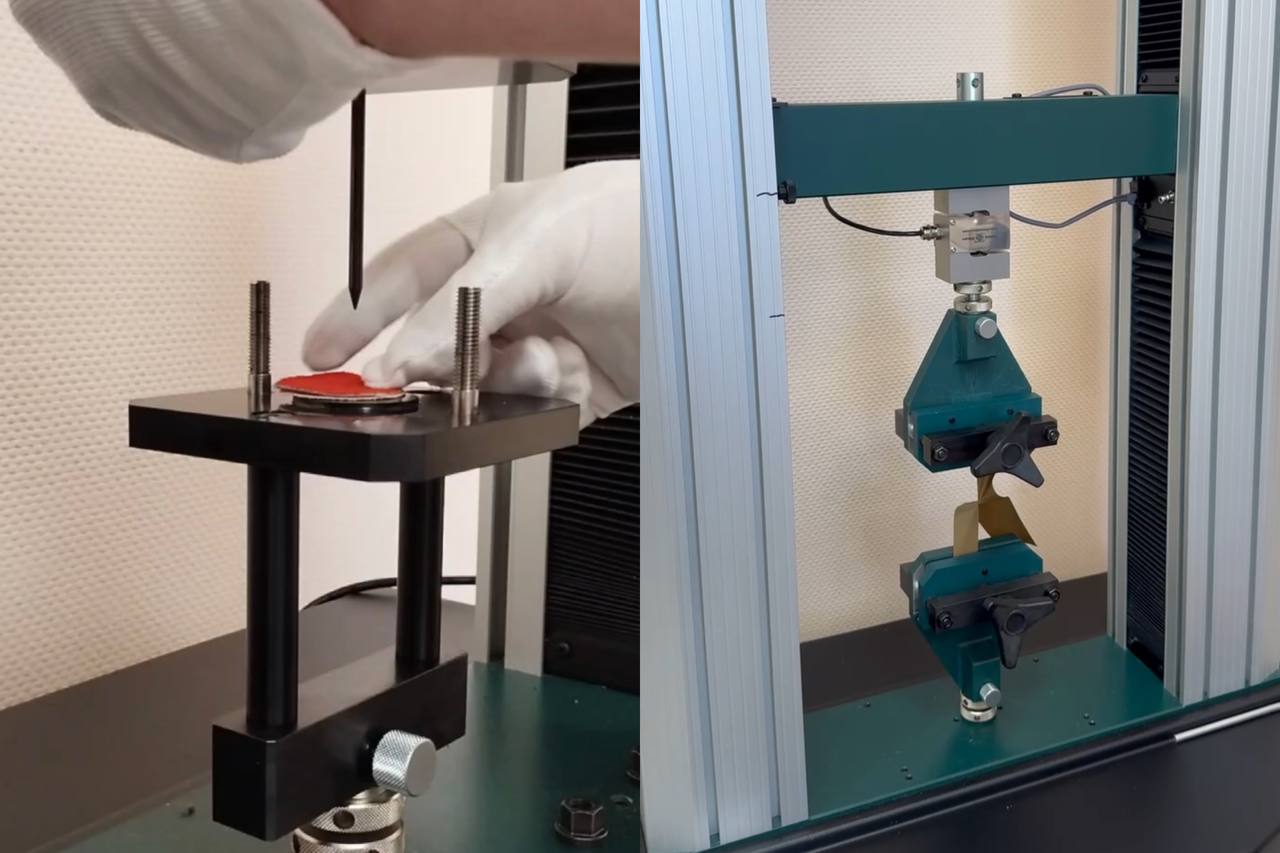
Mechanical testing of textiles and PPE: tear, abrasion, elongation, and puncture
We conduct mechanical tests of fabrics, materials, and personal protective equipment (PPE) for compliance with the requirements of a series of standards, including DSTU EN ISO 9073, DSTU EN ISO 13935, DSTU ISO 13937, DSTU EN ISO 13934, etc. for strength, elasticity, and wear resistance. The tests allow us to assess product quality, guarantee safety of use, and confirm compliance with technical regulations.
Main types of mechanical tests:
Puncture test:
- – Assessment of resistance to puncture by sharp objects (relevant for PPE — gloves, protective clothing, footwear);
- – Determination of maximum load before damage.
Випробування на розрив:
- – Визначення міцності матеріалу при розтягуванні до розриву;
- – Оцінка граничного навантаження і подовження.
Tear test:
– Іsimulation of mechanical impact that may cause damage under operating conditions;
– Assessment of the stability of seams and edges of the product.
Elongation test:
- – Analysis of deformation properties (how elastic or rigid the material is);
- – Important for fabrics that need to perform in dynamic conditions.
We accept samples from manufacturers, trading companies, importers, and certification bodies.
Advantages of the laboratory
Testing laboratory ТОВ “АКАДЕМТЕСТ”
Accreditation, advanced equipment with extensive capabilities for testing, verification, and control of numerous safety parameters
Advanced testing and inspection methods in accordance with current standards and regulations, innovative techniques, and optimal solutions
Experienced experts, technical specialists, and engineers, highly qualified specialists in the team
Affordable testing prices, no middlemen
Prompt testing and rapid receipt of reports
Experience and reputation that guarantee objective, unbiased, and realistic test results
Testing standards
Tests are conducted in accordance with Ukrainian and international standards, in particular:
- DSTU EN ISO 13934, 13937, 9073, 863, 12236 Test methods for textile materials;
- DSTU EN 388, EN ISO 13688, EN 420 (EN 388:2016, IDT) Protective gloves for protection against mechanical damage (for protective gloves, clothing, coveralls, etc.);
- Technical regulations for personal protective equipment, approved by Resolution of the Cabinet of Ministers of Ukraine No. 761 dated August 27, 2008;
- Industry-specific technical specifications (technical conditions) of the Customer, if necessary.
Based on the test results, we provide a test protocol.
Video and cost of testing
The cost of work in each specific case is calculated separately depending on the selected test methods, the type and complexity of the tests, the number of samples, and other factors.
Contact us in any convenient way or write directly to the Provider:
All Technical Regulations according to which we conduct tests
Aerosol sprayers
Technical regulations for aerosol dispensers (Resolution of the Cabinet of Ministers of Ukraine No. 154 dated February 21, 2023)Explosive environments and industrial equipment for explosion protection
Technical regulations for equipment and protective systems intended for use in potentially explosive atmospheres (Resolution of the Cabinet of Ministers of Ukraine No. 1055 dated December 28, 2016)Measuring equipment and weighing
Technical regulations for non-automatic weighing instruments (Resolution of the Cabinet of Ministers of Ukraine No. 1062 dated December 16, 2015) Technical regulations for measuring instruments (Resolution of the Cabinet of Ministers of Ukraine No. 163 dated February 24, 2016) Technical regulations for legally regulated measuring instruments (Resolution of the Cabinet of Ministers of Ukraine No. 94 dated January 13, 2016)Electrical and electronic equipment
Technical regulations for low-voltage electrical equipment (Resolution of the Cabinet of Ministers of Ukraine No. 1067 dated December 16, 2015) Technical regulations on electromagnetic compatibility of equipment (Resolution of the Cabinet of Ministers of Ukraine No. 1077 dated December 16, 2015) Technical Regulation on Restrictions on the Use of Certain Hazardous Substances in Electrical and Electronic Equipment (Resolution of the Cabinet of Ministers of Ukraine No. 1057 dated December 3, 2008)Railway transport
Technical regulations for railway transport infrastructure safety (Resolution of the Cabinet of Ministers of Ukraine No. 494 dated July 11, 2013) Technical regulations for the safety of rolling stock in railway transport (Resolution of the Cabinet of Ministers of Ukraine No. 1194 dated December 30, 2015)Personal protective equipment
Technical regulations for personal protective equipment (Resolution of the Cabinet of Ministers of Ukraine No. 771 dated August 21, 2019)Civil protection measures
Technical Regulations for Civil Protection Equipment (Resolution of the Cabinet of Ministers of Ukraine No. 535 dated May 26, 2023)Machinery and equipment
Technical regulations for machine safety (Resolution of the Cabinet of Ministers of Ukraine No. 62 dated January 30, 2013) Technical regulations for noise emissions into the environment from equipment used outside premises (Resolution of the Cabinet of Ministers of Ukraine No. 1186 dated December 4, 2019)Medical devices and diagnostics
Technical regulations for medical devices (Resolution of the Cabinet of Ministers of Ukraine No. 753 dated October 2, 2013) Technical regulations for in vitro diagnostic medical devices (Resolution of the Cabinet of Ministers of Ukraine No. 754 dated October 2, 2013)Equipment operating under pressure
Technical regulations for pressure equipment (Resolution of the Cabinet of Ministers of Ukraine No. 27 dated January 16, 2019) Technical regulations for simple high-pressure vessels (Resolution of the Cabinet of Ministers of Ukraine No. 1025 dated December 28, 2016)Fuel and energy
Technical regulations regarding requirements for automotive gasoline, diesel, marine and boiler fuels (Resolution of the Cabinet of Ministers of Ukraine No. 927 dated August 1, 2013) Technical regulations regarding requirements for liquefied gas for motor transport, municipal and domestic consumption, and industrial purposes (Resolution of the Cabinet of Ministers of Ukraine No. 667 dated July 29, 2020)Lifting equipment
Technical regulations for elevators and safety components for elevators (Resolution of the Cabinet of Ministers of Ukraine No. 438 dated June 21, 2017)Household chemicals (detergents)
Technical regulations for cleaning products (Resolution of the Cabinet of Ministers of Ukraine No. 717 dated August 20, 2008)Radio and electronic equipment
Technical Regulations for Radio Equipment (Resolution of the Cabinet of Ministers of Ukraine No. 355 dated May 24, 2017)Agriculture and timber industry (tractors)
Technical regulations for the type approval of agricultural and forestry tractors, their trailers and interchangeable towed machinery (Resolution of the Cabinet of Ministers of Ukraine No. 1367 dated December 28, 2011) Technical regulations regarding components and characteristics of wheeled agricultural and forestry tractors (Resolution of the Cabinet of Ministers of Ukraine No. 1368 dated December 28, 2011)Heating equipment
Technical regulations for water heating boilers operating on liquid or gaseous fuel (Resolution of the Cabinet of Ministers of Ukraine No. 748 dated August 27, 2008) Technical regulations for gas-fueled appliances (Resolution of the Cabinet of Ministers of Ukraine No. 814 dated July 4, 2018)Based on the test results, we provide a TEST PROTOCOL
It contains the following information:
- Name and details of the testing laboratory (including accreditation);
- Protocol number and date of compilation;
- Information about the customer who ordered the tests;
- Product name;
- Product type, model, serial number;
- Manufacturer and/or supplier;
- Date of sample receipt by the laboratory;
- Name of the technical regulation or standard according to which the test is conducted;
- List of methods and standards used;
- Test conditions (temperature, humidity, voltage, etc.);
- Measuring instruments (with calibration specifications);
- Detailed data for each test item;
- Measured actual values and their comparison with acceptable standards;
- Comments or observations (if any);
- Overall test result (complies/does not comply with requirements);
- Comments or recommendations (if any);
- Signature(s) of the responsible person(s) and stamp (if applicable).
Industry
We have prepared answers to frequently asked questions from customers.
-
Testing in accordance with international standard DSTU EN 16732, which guarantees recognition of results
-
Automated testing system using modern equipment
-
Realistic operational modeling: load mode is as close as possible to actual fastener usage conditions
-
Fast turnaround and affordable prices
-
Official test report, drawn up in accordance with the requirements of ISO/IEC 17025 and accepted by certification bodies
Competent authorities

Leave a request for a consultation
Describe your request and our specialist will contact you shortly to provide detailed advice on certification, conformity assessment or product labeling in accordance with Ukrainian and EU requirements.
Testing of zippers by cyclic loading in accordance with DSTU EN 16732
Zipper testing by cyclic loading is performed to evaluate their mechanical strength, durability, and reliability during repeated use.
According to the requirements of the DSTU EN 16732:2017 (EN 16732:2015) standard, the zipper is subjected to repeated cycles of opening and closing under a specified load that simulates real operating conditions.
During testing, the fastener’s ability to maintain functionality, integrity of links, moving parts, tape, and connections after a set number of cycles (usually 500 to 10,000) is monitored.
Signs of wear, jamming, breaks, or deformations are also registered.
The test results allow assessing the quality of zippers used in the manufacture of clothing, footwear, tourist equipment, personal protective equipment, technical textiles, and furniture.
Advantages of the laboratory
Testing laboratory ТОВ “АКАДЕМТЕСТ”
Accreditation, advanced equipment with extensive capabilities for testing, verification, and control of numerous safety parameters
Advanced testing and inspection methods in accordance with current standards and regulations, innovative techniques, and optimal solutions
Experienced experts, technical specialists, and engineers, highly qualified specialists in the team
Affordable testing prices, no middlemen
Prompt testing and rapid receipt of reports
Experience and reputation that guarantee objective, unbiased, and realistic test results
Video and cost of testing
The cost of work in each specific case is calculated separately depending on the selected test methods, the type and complexity of the tests, the number of samples, and other factors.
Contact us in any convenient way or write directly to the Provider:
All Technical Regulations according to which we conduct tests
Aerosol sprayers
Technical regulations for aerosol dispensers (Resolution of the Cabinet of Ministers of Ukraine No. 154 dated February 21, 2023)Explosive environments and industrial equipment for explosion protection
Technical regulations for equipment and protective systems intended for use in potentially explosive atmospheres (Resolution of the Cabinet of Ministers of Ukraine No. 1055 dated December 28, 2016)Measuring equipment and weighing
Technical regulations for non-automatic weighing instruments (Resolution of the Cabinet of Ministers of Ukraine No. 1062 dated December 16, 2015) Technical regulations for measuring instruments (Resolution of the Cabinet of Ministers of Ukraine No. 163 dated February 24, 2016) Technical regulations for legally regulated measuring instruments (Resolution of the Cabinet of Ministers of Ukraine No. 94 dated January 13, 2016)Electrical and electronic equipment
Technical regulations for low-voltage electrical equipment (Resolution of the Cabinet of Ministers of Ukraine No. 1067 dated December 16, 2015) Technical regulations on electromagnetic compatibility of equipment (Resolution of the Cabinet of Ministers of Ukraine No. 1077 dated December 16, 2015) Technical Regulation on Restrictions on the Use of Certain Hazardous Substances in Electrical and Electronic Equipment (Resolution of the Cabinet of Ministers of Ukraine No. 1057 dated December 3, 2008)Railway transport
Technical regulations for railway transport infrastructure safety (Resolution of the Cabinet of Ministers of Ukraine No. 494 dated July 11, 2013) Technical regulations for the safety of rolling stock in railway transport (Resolution of the Cabinet of Ministers of Ukraine No. 1194 dated December 30, 2015)Personal protective equipment
Technical regulations for personal protective equipment (Resolution of the Cabinet of Ministers of Ukraine No. 771 dated August 21, 2019)Civil protection measures
Technical Regulations for Civil Protection Equipment (Resolution of the Cabinet of Ministers of Ukraine No. 535 dated May 26, 2023)Machinery and equipment
Technical regulations for machine safety (Resolution of the Cabinet of Ministers of Ukraine No. 62 dated January 30, 2013) Technical regulations for noise emissions into the environment from equipment used outside premises (Resolution of the Cabinet of Ministers of Ukraine No. 1186 dated December 4, 2019)Medical devices and diagnostics
Technical regulations for medical devices (Resolution of the Cabinet of Ministers of Ukraine No. 753 dated October 2, 2013) Technical regulations for in vitro diagnostic medical devices (Resolution of the Cabinet of Ministers of Ukraine No. 754 dated October 2, 2013)Equipment operating under pressure
Technical regulations for pressure equipment (Resolution of the Cabinet of Ministers of Ukraine No. 27 dated January 16, 2019) Technical regulations for simple high-pressure vessels (Resolution of the Cabinet of Ministers of Ukraine No. 1025 dated December 28, 2016)Fuel and energy
Technical regulations regarding requirements for automotive gasoline, diesel, marine and boiler fuels (Resolution of the Cabinet of Ministers of Ukraine No. 927 dated August 1, 2013) Technical regulations regarding requirements for liquefied gas for motor transport, municipal and domestic consumption, and industrial purposes (Resolution of the Cabinet of Ministers of Ukraine No. 667 dated July 29, 2020)Lifting equipment
Technical regulations for elevators and safety components for elevators (Resolution of the Cabinet of Ministers of Ukraine No. 438 dated June 21, 2017)Household chemicals (detergents)
Technical regulations for cleaning products (Resolution of the Cabinet of Ministers of Ukraine No. 717 dated August 20, 2008)Radio and electronic equipment
Technical Regulations for Radio Equipment (Resolution of the Cabinet of Ministers of Ukraine No. 355 dated May 24, 2017)Agriculture and timber industry (tractors)
Technical regulations for the type approval of agricultural and forestry tractors, their trailers and interchangeable towed machinery (Resolution of the Cabinet of Ministers of Ukraine No. 1367 dated December 28, 2011) Technical regulations regarding components and characteristics of wheeled agricultural and forestry tractors (Resolution of the Cabinet of Ministers of Ukraine No. 1368 dated December 28, 2011)Heating equipment
Technical regulations for water heating boilers operating on liquid or gaseous fuel (Resolution of the Cabinet of Ministers of Ukraine No. 748 dated August 27, 2008) Technical regulations for gas-fueled appliances (Resolution of the Cabinet of Ministers of Ukraine No. 814 dated July 4, 2018)Based on the test results, we provide a TEST PROTOCOL
It contains the following information:
- Name and details of the testing laboratory (including accreditation);
- Protocol number and date of compilation;
- Information about the customer who ordered the tests;
- Product name;
- Product type, model, serial number;
- Manufacturer and/or supplier;
- Date of sample receipt by the laboratory;
- Name of the technical regulation or standard according to which the test is conducted;
- List of methods and standards used;
- Test conditions (temperature, humidity, voltage, etc.);
- Measuring instruments (with calibration specifications);
- Detailed data for each test item;
- Measured actual values and their comparison with acceptable standards;
- Comments or observations (if any);
- Overall test result (complies/does not comply with requirements);
- Comments or recommendations (if any);
- Signature(s) of the responsible person(s) and stamp (if applicable).
Industry
We have prepared answers to frequently asked questions from customers.
-
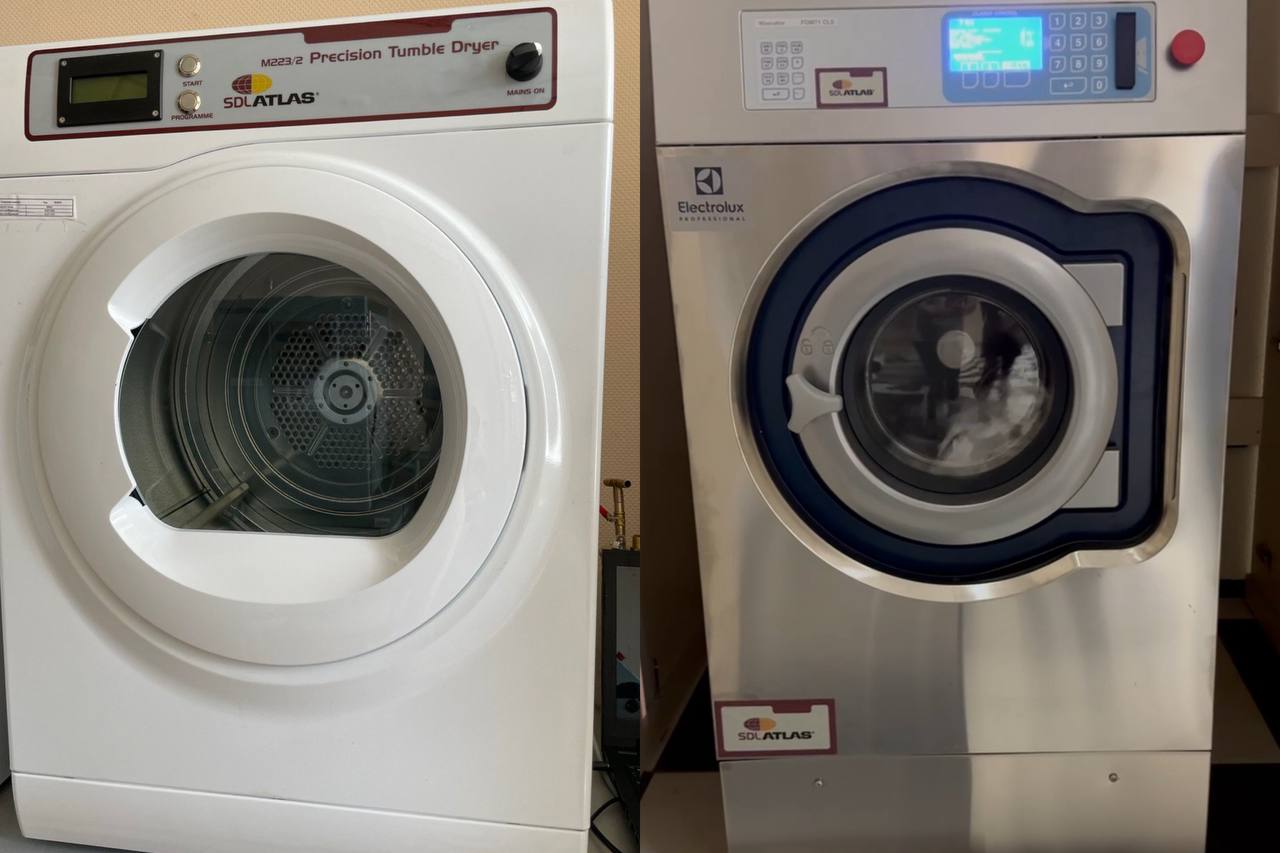
Modern United States testing machines
-
High accuracy of results in accordance with DSTU ISO 6330, DSTU ISO 5077, DSTU ISO 3759
-
Prompt testing and provision of test reports
-
Impartiality and transparency: all procedures are performed in accordance with quality standards, ensuring objectivity and trust on the part of customers.
-
Affordable prices without intermediaries
Competent authorities
Leave a request for a consultation
Describe your request and our specialist will contact you shortly to provide detailed advice on certification, conformity assessment or product labeling in accordance with Ukrainian and EU requirements.
Testing changes in the linear dimensions of textiles after washing and drying
Determination of shrinkage or stretching of textile materials after exposure to water, temperature, mechanical action during washing and drying. The test is carried out in accordance with a series of international standards:
- – DSTU ISO 6330 (ISO 6330) “Textiles. Methods of domestic washing and drying for testing textile materials”
- – DSTU ISO 5077 “Textile materials. Method for determining changes in linear dimensions after washing and drying”
- – DSTU ISO 3759 “Textile materials. Preparation, marking, and measurement of textile materials and clothing samples for testing to determine changes in linear dimensions.”
The results allow assessing the stability of the shape of fabrics and products during use and care.
Why testing is necessary:
- 1. Assessment of the quality characteristics of fabrics and finished products (clothing, uniforms, underwear, medical and technical textiles).
- 2. Control of compliance with technical conditions or standards before entering the market.
- 3. Preparation for certification of PPE, workwear, or household textiles.
- 4. Verification of fabric properties during the development of new products.
Based on the results, you will receive:
- – Protocol indicating shrinkage (in %) along the length and width.
- – Conclusion on compliance with the standard or technical specifications.
- – Basis for confirming quality, making changes to production processes, or product certification.
Advantages of the laboratory
Testing laboratory ТОВ “АКАДЕМТЕСТ”
Accreditation, advanced equipment with extensive capabilities for testing, verification, and control of numerous safety parameters
Advanced testing and inspection methods in accordance with current standards and regulations, innovative techniques, and optimal solutions
Experienced experts, technical specialists, and engineers, highly qualified specialists in the team
Affordable testing prices, no middlemen
Prompt testing and rapid obtaining of protocols
Experience and reputation that guarantee objective, unbiased, and realistic test results
Standards according to which tests are conducted
- DSTU ISO 6330 (ISO 6330) “Textiles. Methods of domestic washing and drying for testing textile materials”;
- DSTU ISO 5077 “Textile materials. Method for determining changes in linear dimensions after washing and drying”;
- DSTU ISO 3759 “Textile materials. Preparation, marking, and measurement of textile materials and clothing samples for testing to determine changes in linear dimensions.”
Based on the results of testing product samples, you will receive a Test Protocol.
Video and cost of testing
The cost of work in each specific case is calculated separately depending on the selected test methods, the type and complexity of the tests, the number of samples, and other factors.
Contact us in any convenient way or write directly to the Provider:
All Technical Regulations according to which we conduct tests
Aerosol sprayers
Technical regulations for aerosol dispensers (Resolution of the Cabinet of Ministers of Ukraine No. 154 dated February 21, 2023)Explosive environments and industrial equipment for explosion protection
Technical regulations for equipment and protective systems intended for use in potentially explosive atmospheres (Resolution of the Cabinet of Ministers of Ukraine No. 1055 dated December 28, 2016)Measuring equipment and weighing
Technical regulations for non-automatic weighing instruments (Resolution of the Cabinet of Ministers of Ukraine No. 1062 dated December 16, 2015) Technical regulations for measuring instruments (Resolution of the Cabinet of Ministers of Ukraine No. 163 dated February 24, 2016) Technical regulations for legally regulated measuring instruments (Resolution of the Cabinet of Ministers of Ukraine No. 94 dated January 13, 2016)Electrical and electronic equipment
Technical regulations for low-voltage electrical equipment (Resolution of the Cabinet of Ministers of Ukraine No. 1067 dated December 16, 2015) Technical regulations on electromagnetic compatibility of equipment (Resolution of the Cabinet of Ministers of Ukraine No. 1077 dated December 16, 2015) Technical Regulation on Restrictions on the Use of Certain Hazardous Substances in Electrical and Electronic Equipment (Resolution of the Cabinet of Ministers of Ukraine No. 1057 dated December 3, 2008)Railway transport
Technical regulations for railway transport infrastructure safety (Resolution of the Cabinet of Ministers of Ukraine No. 494 dated July 11, 2013) Technical regulations for the safety of rolling stock in railway transport (Resolution of the Cabinet of Ministers of Ukraine No. 1194 dated December 30, 2015)Personal protective equipment
Technical regulations for personal protective equipment (Resolution of the Cabinet of Ministers of Ukraine No. 771 dated August 21, 2019)Civil protection measures
Technical Regulations for Civil Protection Equipment (Resolution of the Cabinet of Ministers of Ukraine No. 535 dated May 26, 2023)Machinery and equipment
Technical regulations for machine safety (Resolution of the Cabinet of Ministers of Ukraine No. 62 dated January 30, 2013) Technical regulations for noise emissions into the environment from equipment used outside premises (Resolution of the Cabinet of Ministers of Ukraine No. 1186 dated December 4, 2019)Medical devices and diagnostics
Technical regulations for medical devices (Resolution of the Cabinet of Ministers of Ukraine No. 753 dated October 2, 2013) Technical regulations for in vitro diagnostic medical devices (Resolution of the Cabinet of Ministers of Ukraine No. 754 dated October 2, 2013)Equipment operating under pressure
Technical regulations for pressure equipment (Resolution of the Cabinet of Ministers of Ukraine No. 27 dated January 16, 2019) Technical regulations for simple high-pressure vessels (Resolution of the Cabinet of Ministers of Ukraine No. 1025 dated December 28, 2016)Fuel and energy
Technical regulations regarding requirements for automotive gasoline, diesel, marine and boiler fuels (Resolution of the Cabinet of Ministers of Ukraine No. 927 dated August 1, 2013) Technical regulations regarding requirements for liquefied gas for motor transport, municipal and domestic consumption, and industrial purposes (Resolution of the Cabinet of Ministers of Ukraine No. 667 dated July 29, 2020)Lifting equipment
Technical regulations for elevators and safety components for elevators (Resolution of the Cabinet of Ministers of Ukraine No. 438 dated June 21, 2017)Household chemicals (detergents)
Technical regulations for cleaning products (Resolution of the Cabinet of Ministers of Ukraine No. 717 dated August 20, 2008)Radio and electronic equipment
Technical Regulations for Radio Equipment (Resolution of the Cabinet of Ministers of Ukraine No. 355 dated May 24, 2017)Agriculture and timber industry (tractors)
Technical regulations for the type approval of agricultural and forestry tractors, their trailers and interchangeable towed machinery (Resolution of the Cabinet of Ministers of Ukraine No. 1367 dated December 28, 2011) Technical regulations regarding components and characteristics of wheeled agricultural and forestry tractors (Resolution of the Cabinet of Ministers of Ukraine No. 1368 dated December 28, 2011)Heating equipment
Technical regulations for water heating boilers operating on liquid or gaseous fuel (Resolution of the Cabinet of Ministers of Ukraine No. 748 dated August 27, 2008) Technical regulations for gas-fueled appliances (Resolution of the Cabinet of Ministers of Ukraine No. 814 dated July 4, 2018)Based on the test results, we provide a TEST PROTOCOL
It contains the following information:
- Name and details of the testing laboratory (including accreditation);
- Protocol number and date of compilation;
- Information about the customer who ordered the tests;
- Product name;
- Product type, model, serial number;
- Manufacturer and/or supplier;
- Date of sample receipt by the laboratory;
- Name of the technical regulation or standard according to which the test is conducted;
- List of methods and standards used;
- Test conditions (temperature, humidity, voltage, etc.);
- Measuring instruments (with calibration specifications);
- Detailed data for each test item;
- Measured actual values and their comparison with acceptable standards;
- Comments or observations (if any);
- Overall test result (complies/does not comply with requirements);
- Comments or recommendations (if any);
- Signature(s) of the responsible person(s) and stamp (if applicable).
Industry
We have prepared answers to frequently asked questions from customers.
-
Guaranteed safety and quality of high-visibility clothing and road signs for road users in difficult visibility conditions
-
Participation of manufacturers in tenders and public procurement
-
Launch of products on EU markets
-
Prompt completion of work and provision of reports
-
Competitive prices without intermediaries
Competent authorities

Leave a request for a consultation
Describe your request and our specialist will contact you shortly to provide detailed advice on certification, conformity assessment or product labeling in accordance with Ukrainian and EU requirements.
Testing the reflectivity of clothing and road signs according to European standards
We test the light-reflecting properties of materials in accordance with European standards: high-visibility clothing in accordance with DSTU EN 20471 and road signs in accordance with EN 12899. Testing is carried out in accordance with current requirements for personal protective equipment (PPE), workwear, and road signs. The EN 20471 standard establishes requirements for high-visibility clothing designed to make workers visible in all visibility conditions, day and night, especially in artificial lighting and under car headlights.
Standard EN 12899-1 specifies the materials, construction, retroreflective characteristics, colors, and performance properties that road signs must have to ensure their visibility, durability, and road safety.
What we test:
- Reflective elements of workwear, vests, uniforms;
- Road and information signs with fluorescent and retroreflective materials;
- Ribbons, stickers, markings, other safety elements.
Why testing is necessary:
- – Confirmation of product compliance with European standards and certification;
- – Ensuring employee safety during nighttime hours or in conditions of poor visibility;
- – As a mandatory requirement for export to the EU or participation in tenders;
- – Increasing trust in the brand and product quality.
Advantages of the laboratory
Testing laboratory ТОВ “АКАДЕМТЕСТ”
Accreditation, advanced equipment with extensive capabilities for testing, verification, and control of numerous safety parameters
Advanced testing and inspection methods in accordance with current standards and regulations, innovative techniques, and optimal solutions
Experienced experts, technical specialists, and engineers, highly qualified specialists in the team
Affordable testing prices, no middlemen
Prompt testing and rapid receipt of reports
Experience and reputation that guarantee objective, unbiased, and realistic test results
Standards according to which tests are conducted
- DSTU EN ISO 20471:2016
(EN ISO 20471:2013, IDT; ISO 20471:2013, IDT; EN ISO 20471:2013/A1:2016, IDT;
ISO 20471:2013/Amd 1:2016, IDT) High visibility clothing – Test methods and requirements;
- DSTU EN 12899-1:2021
(EN 12899-1:2007, IDT) Vertical stationary road signs.
In the sphere of testing the light-reflecting capacity of clothing and road signs, regulatory control is based on European standards, as well as — in the case of work in Ukraine — on state (DSTU) standards harmonized with European ones.
Based on the results of testing product samples, you will receive a Test Protocol.
Cost of testing
The cost of work in each specific case is calculated separately depending on the type and complexity of the tests, the number of samples, and other factors.
Contact us in any convenient way or write directly to the Provider:
All Technical Regulations according to which we conduct tests
Aerosol sprayers
Technical regulations for aerosol dispensers (Resolution of the Cabinet of Ministers of Ukraine No. 154 dated February 21, 2023)Explosive environments and industrial equipment for explosion protection
Technical regulations for equipment and protective systems intended for use in potentially explosive atmospheres (Resolution of the Cabinet of Ministers of Ukraine No. 1055 dated December 28, 2016)Measuring equipment and weighing
Technical regulations for non-automatic weighing instruments (Resolution of the Cabinet of Ministers of Ukraine No. 1062 dated December 16, 2015) Technical regulations for measuring instruments (Resolution of the Cabinet of Ministers of Ukraine No. 163 dated February 24, 2016) Technical regulations for legally regulated measuring instruments (Resolution of the Cabinet of Ministers of Ukraine No. 94 dated January 13, 2016)Electrical and electronic equipment
Technical regulations for low-voltage electrical equipment (Resolution of the Cabinet of Ministers of Ukraine No. 1067 dated December 16, 2015) Technical regulations on electromagnetic compatibility of equipment (Resolution of the Cabinet of Ministers of Ukraine No. 1077 dated December 16, 2015) Technical Regulation on Restrictions on the Use of Certain Hazardous Substances in Electrical and Electronic Equipment (Resolution of the Cabinet of Ministers of Ukraine No. 1057 dated December 3, 2008)Railway transport
Technical regulations for railway transport infrastructure safety (Resolution of the Cabinet of Ministers of Ukraine No. 494 dated July 11, 2013) Technical regulations for the safety of rolling stock in railway transport (Resolution of the Cabinet of Ministers of Ukraine No. 1194 dated December 30, 2015)Personal protective equipment
Technical regulations for personal protective equipment (Resolution of the Cabinet of Ministers of Ukraine No. 771 dated August 21, 2019)Civil protection measures
Technical Regulations for Civil Protection Equipment (Resolution of the Cabinet of Ministers of Ukraine No. 535 dated May 26, 2023)Machinery and equipment
Technical regulations for machine safety (Resolution of the Cabinet of Ministers of Ukraine No. 62 dated January 30, 2013) Technical regulations for noise emissions into the environment from equipment used outside premises (Resolution of the Cabinet of Ministers of Ukraine No. 1186 dated December 4, 2019)Medical devices and diagnostics
Technical regulations for medical devices (Resolution of the Cabinet of Ministers of Ukraine No. 753 dated October 2, 2013) Technical regulations for in vitro diagnostic medical devices (Resolution of the Cabinet of Ministers of Ukraine No. 754 dated October 2, 2013)Equipment operating under pressure
Technical regulations for pressure equipment (Resolution of the Cabinet of Ministers of Ukraine No. 27 dated January 16, 2019) Technical regulations for simple high-pressure vessels (Resolution of the Cabinet of Ministers of Ukraine No. 1025 dated December 28, 2016)Fuel and energy
Technical regulations regarding requirements for automotive gasoline, diesel, marine and boiler fuels (Resolution of the Cabinet of Ministers of Ukraine No. 927 dated August 1, 2013) Technical regulations regarding requirements for liquefied gas for motor transport, municipal and domestic consumption, and industrial purposes (Resolution of the Cabinet of Ministers of Ukraine No. 667 dated July 29, 2020)Lifting equipment
Technical regulations for elevators and safety components for elevators (Resolution of the Cabinet of Ministers of Ukraine No. 438 dated June 21, 2017)Household chemicals (detergents)
Technical regulations for cleaning products (Resolution of the Cabinet of Ministers of Ukraine No. 717 dated August 20, 2008)Radio and electronic equipment
Technical Regulations for Radio Equipment (Resolution of the Cabinet of Ministers of Ukraine No. 355 dated May 24, 2017)Agriculture and timber industry (tractors)
Technical regulations for the type approval of agricultural and forestry tractors, their trailers and interchangeable towed machinery (Resolution of the Cabinet of Ministers of Ukraine No. 1367 dated December 28, 2011) Technical regulations regarding components and characteristics of wheeled agricultural and forestry tractors (Resolution of the Cabinet of Ministers of Ukraine No. 1368 dated December 28, 2011)Heating equipment
Technical regulations for water heating boilers operating on liquid or gaseous fuel (Resolution of the Cabinet of Ministers of Ukraine No. 748 dated August 27, 2008) Technical regulations for gas-fueled appliances (Resolution of the Cabinet of Ministers of Ukraine No. 814 dated July 4, 2018)Based on the test results, we provide a TEST PROTOCOL
It contains the following information:
- Name and details of the testing laboratory (including accreditation);
- Protocol number and date of compilation;
- Information about the customer who ordered the tests;
- Product name;
- Product type, model, serial number;
- Manufacturer and/or supplier;
- Date of sample receipt by the laboratory;
- Name of the technical regulation or standard according to which the test is conducted;
- List of methods and standards used;
- Test conditions (temperature, humidity, voltage, etc.);
- Measuring instruments (with calibration specifications);
- Detailed data for each test item;
- Measured actual values and their comparison with acceptable standards;
- Comments or observations (if any);
- Overall test result (complies/does not comply with requirements);
- Comments or recommendations (if any);
- Signature(s) of the responsible person(s) and stamp (if applicable).
Industry
We have prepared answers to frequently asked questions from customers.
-
Testing of electrical equipment in accordance with the Technical Regulations on Electromagnetic Compatibility of Equipment (Cabinet of Ministers of Ukraine Resolution No. 1077 dated December 16, 2015)
-
ESD testing for immunity to electrostatic discharges in accordance with DSTU IEC 61000-4-2
-
Unique ESD generator for testing is available in Ukraine
-
Quick receipt of test reports with accurate and reliable results
-
Affordable prices without intermediaries
Competent authorities
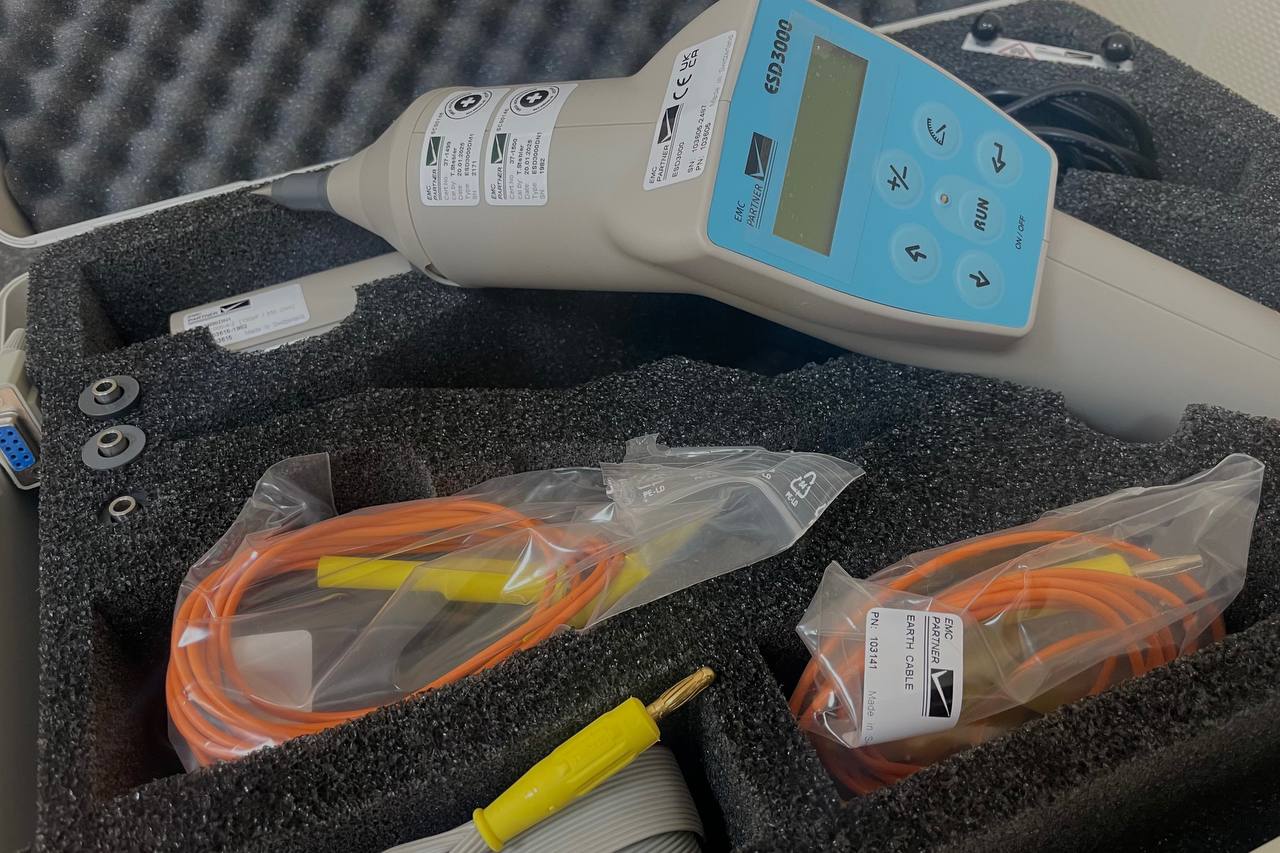
Leave a request for a consultation
Describe your request and our specialist will contact you shortly to provide detailed advice on certification, conformity assessment or product labeling in accordance with Ukrainian and EU requirements.
Testing electrical equipment for resistance to electrostatic discharges
We test electronic and electrical equipment for resistance to electrostatic discharge (ESD) in accordance with the requirements of the international standard DSTU IEC 61000-4-2, which is harmonized with European and global practices for assessing electromagnetic compatibility (EMC).
Electrostatic discharges can occur when a person or object comes into contact with or approaches electronic devices. Such discharges can cause malfunctions, damage to microchips, or complete equipment failure. The purpose of the test is to verify that the device can withstand ESD exposure without compromising functionality, in accordance with regulatory levels.
What the service includes:
- Conducting contact and air discharge at control points in accordance with the test procedure
- Use of an ESD generator (simulator) in accordance with the standard (capacitance 150 pF, resistance 330 Ohm)
- Use of reference ground planes and device placement in accordance with the standard diagram
- Measurement of the effect of ESD on equipment operation
- Classification of device response according to compliance levels (classes A, B, C, D)
Who is ESD testing for:
- – Manufacturers of electronics and electrical equipment
- – Importers and distributors
- – Developers of embedded systems
- – Companies undergoing electromagnetic compatibility (EMC) certification
- – Laboratories preparing technical documentation for the EU, Ukraine, or other markets
Why ESD testing is necessary:
- 1. Protection of products from warranty costs and complaints.
- 2. Compliance with legislation on Technical Regulations and EMC (mandatory conformity assessment).
- 3. A necessary stage of product certification in Ukraine and the EU.
- 4. Ensuring the reliability and safety of electronic devices in real-world conditions.
Advantages of laboratories
Accreditation, advanced equipment with extensive capabilities for testing, verification, and control of numerous safety parameters
Advanced testing and inspection methods in accordance with current standards and regulations, innovative techniques, and optimal solutions
Experienced experts, technical specialists, and engineers, highly qualified specialists in the team
Affordable testing prices, no middlemen
Prompt testing and rapid receipt of reports
Experience and reputation that guarantee objective, unbiased, and realistic test results
Regulatory framework in the domain
- Technical regulations on electromagnetic compatibility of equipment (Cabinet of Ministers of Ukraine Resolution No. 1077 dated December 16, 2015);
- Directive 2014/30/EU Electromagnetic Compatibility (EMC);
- DSTU IEC 61000-4-2:2008 ELECTROMAGNETIC COMPATIBILITY. Test methods
and measurements.
Testing for immunity
to electrostatic discharges
(IEC 61000-4-2:2001, IDT)
Manufacturers who plan to export their products to the European market must take into account that electrical equipment and appliances must undergo conformity assessment in accordance with Directive 2014/30/EU on electromagnetic compatibility.
Only full compliance with the requirements of Directive 2014/30/EU entitles the manufacturer to CE marking, release, and free circulation on the European electrical equipment market. Compliance with the requirements of the Directive is mandatory for all market participants: manufacturers, importers, and distributors, who must ensure compliance of equipment with European legislation at every stage.
Cost of testing
The cost of work in each specific case is calculated separately depending on the selected test methods, the type and complexity of the tests, the number of samples, and other factors.
Contact us in any convenient way or write directly to the Provider:
All Technical Regulations according to which we conduct tests
Aerosol sprayers
Technical regulations for aerosol dispensers (Resolution of the Cabinet of Ministers of Ukraine No. 154 dated February 21, 2023)Explosive environments and industrial equipment for explosion protection
Technical regulations for equipment and protective systems intended for use in potentially explosive atmospheres (Resolution of the Cabinet of Ministers of Ukraine No. 1055 dated December 28, 2016)Measuring equipment and weighing
Technical regulations for non-automatic weighing instruments (Resolution of the Cabinet of Ministers of Ukraine No. 1062 dated December 16, 2015) Technical regulations for measuring instruments (Resolution of the Cabinet of Ministers of Ukraine No. 163 dated February 24, 2016) Technical regulations for legally regulated measuring instruments (Resolution of the Cabinet of Ministers of Ukraine No. 94 dated January 13, 2016)Electrical and electronic equipment
Technical regulations for low-voltage electrical equipment (Resolution of the Cabinet of Ministers of Ukraine No. 1067 dated December 16, 2015) Technical regulations on electromagnetic compatibility of equipment (Resolution of the Cabinet of Ministers of Ukraine No. 1077 dated December 16, 2015) Technical Regulation on Restrictions on the Use of Certain Hazardous Substances in Electrical and Electronic Equipment (Resolution of the Cabinet of Ministers of Ukraine No. 1057 dated December 3, 2008)Railway transport
Technical regulations for railway transport infrastructure safety (Resolution of the Cabinet of Ministers of Ukraine No. 494 dated July 11, 2013) Technical regulations for the safety of rolling stock in railway transport (Resolution of the Cabinet of Ministers of Ukraine No. 1194 dated December 30, 2015)Personal protective equipment
Technical regulations for personal protective equipment (Resolution of the Cabinet of Ministers of Ukraine No. 771 dated August 21, 2019)Civil protection measures
Technical Regulations for Civil Protection Equipment (Resolution of the Cabinet of Ministers of Ukraine No. 535 dated May 26, 2023)Machinery and equipment
Technical regulations for machine safety (Resolution of the Cabinet of Ministers of Ukraine No. 62 dated January 30, 2013) Technical regulations for noise emissions into the environment from equipment used outside premises (Resolution of the Cabinet of Ministers of Ukraine No. 1186 dated December 4, 2019)Medical devices and diagnostics
Technical regulations for medical devices (Resolution of the Cabinet of Ministers of Ukraine No. 753 dated October 2, 2013) Technical regulations for in vitro diagnostic medical devices (Resolution of the Cabinet of Ministers of Ukraine No. 754 dated October 2, 2013)Equipment operating under pressure
Technical regulations for pressure equipment (Resolution of the Cabinet of Ministers of Ukraine No. 27 dated January 16, 2019) Technical regulations for simple high-pressure vessels (Resolution of the Cabinet of Ministers of Ukraine No. 1025 dated December 28, 2016)Fuel and energy
Technical regulations regarding requirements for automotive gasoline, diesel, marine and boiler fuels (Resolution of the Cabinet of Ministers of Ukraine No. 927 dated August 1, 2013) Technical regulations regarding requirements for liquefied gas for motor transport, municipal and domestic consumption, and industrial purposes (Resolution of the Cabinet of Ministers of Ukraine No. 667 dated July 29, 2020)Lifting equipment
Technical regulations for elevators and safety components for elevators (Resolution of the Cabinet of Ministers of Ukraine No. 438 dated June 21, 2017)Household chemicals (detergents)
Technical regulations for cleaning products (Resolution of the Cabinet of Ministers of Ukraine No. 717 dated August 20, 2008)Radio and electronic equipment
Technical Regulations for Radio Equipment (Resolution of the Cabinet of Ministers of Ukraine No. 355 dated May 24, 2017)Agriculture and timber industry (tractors)
Technical regulations for the type approval of agricultural and forestry tractors, their trailers and interchangeable towed machinery (Resolution of the Cabinet of Ministers of Ukraine No. 1367 dated December 28, 2011) Technical regulations regarding components and characteristics of wheeled agricultural and forestry tractors (Resolution of the Cabinet of Ministers of Ukraine No. 1368 dated December 28, 2011)Heating equipment
Technical regulations for water heating boilers operating on liquid or gaseous fuel (Resolution of the Cabinet of Ministers of Ukraine No. 748 dated August 27, 2008) Technical regulations for gas-fueled appliances (Resolution of the Cabinet of Ministers of Ukraine No. 814 dated July 4, 2018)Based on the test results, we provide a TEST PROTOCOL
It contains the following information:
- Name and details of the testing laboratory (including accreditation);
- Protocol number and date of compilation;
- Information about the customer who ordered the tests;
- Product name;
- Product type, model, serial number;
- Manufacturer and/or supplier;
- Date of sample receipt by the laboratory;
- Name of the technical regulation or standard according to which the test is conducted;
- List of methods and standards used;
- Test conditions (temperature, humidity, voltage, etc.);
- Measuring instruments (with calibration specifications);
- Detailed data for each test item;
- Measured actual values and their comparison with acceptable standards;
- Comments or observations (if any);
- Overall test result (complies/does not comply with requirements);
- Comments or recommendations (if any);
- Signature(s) of the responsible person(s) and stamp (if applicable).
Industry
We have prepared answers to frequently asked questions from customers.